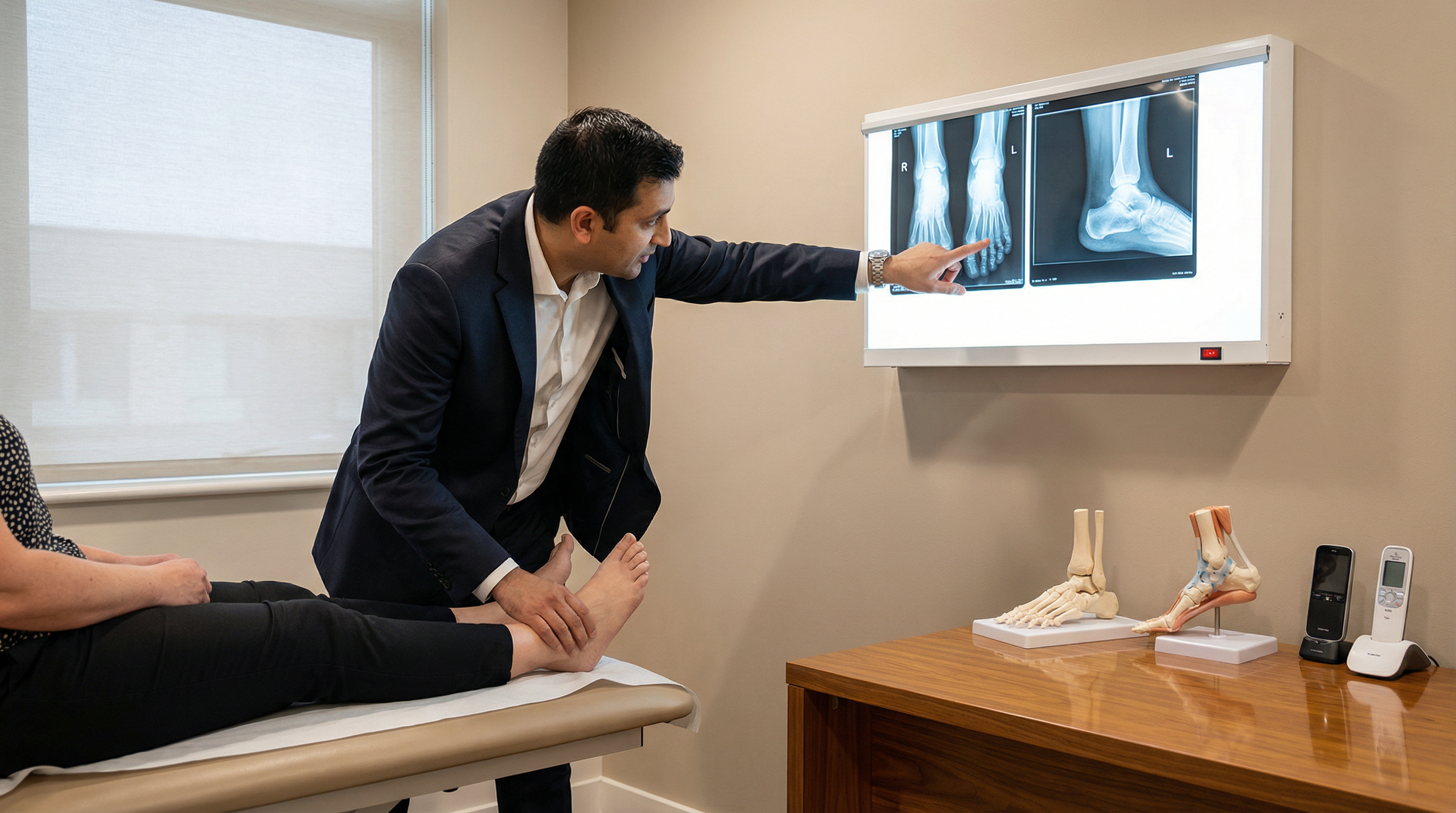
Plantar Fasciitis: Conservative vs. surgical treatment
Exploring treatment options for chronic heel pain and when surgery becomes necessary.
Mr Amr Abouelela
trauma & orthopaedic Consultant

Plantar fasciitis is one of the most common causes of heel pain, affecting millions of people worldwide. This article discusses the latest treatment approaches and when surgical intervention may be beneficial.
Understanding Plantar Fasciitis
The plantar fascia is a thick band of tissue that runs along the bottom of your foot. When this tissue becomes inflamed or strained, it causes heel pain, particularly in the morning or after periods of rest.
Conservative treatment Options
Most cases of plantar fasciitis respond well to conservative treatment:
#Physiotherapy - Stretching exercises - Strengthening exercises - Soft tissue mobilization
#Orthotics - Custom insoles - Heel cups - Arch supports
#Other approaches - Anti-inflammatory medications - Ice therapy - activity modification - Weight management
advanced Conservative treatments
When standard conservative treatment isn't sufficient:
- Corticosteroid injections
- Platelet-rich plasma (PRP) therapy
- Extracorporeal shock wave therapy (ESWT)
surgical Options
surgery is considered only after conservative treatment has failed (typically 6-12 months):
#Plantar Fascia Release - Partial or complete release of the fascia - Minimally invasive or open approach - Effective for chronic cases
#Heel Spur Removal - Removal of bone spurs - Often combined with fascia release
Success Rates
- Conservative treatment: 90% success rate
- surgical treatment: 85-90% success rate for appropriate candidates
Early intervention and comprehensive conservative treatment offer the best outcomes for most patients.